Chapter VI · The Drinking: Plain reading — For tea of rare freshness and rich fragrance, pour but…
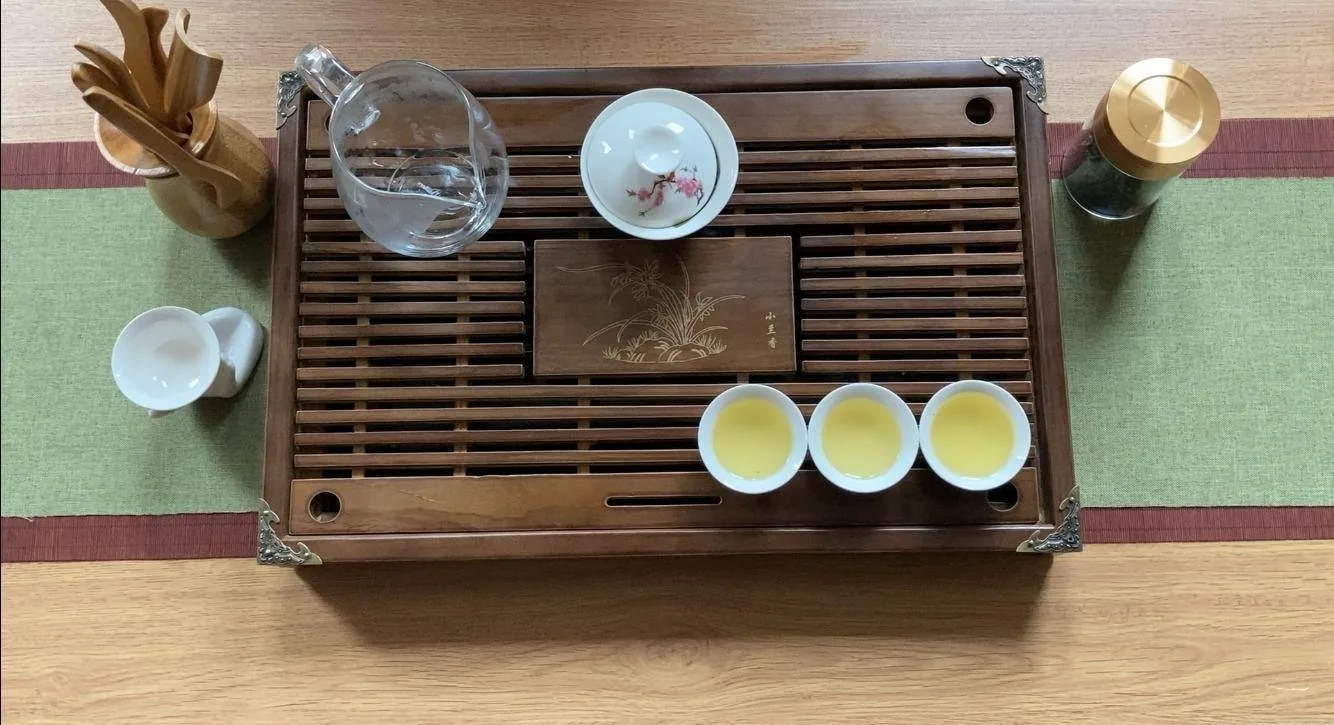
Photo: Wikimedia Commons · CC BY-SA 4.0

The passage
“For tea of rare freshness and rich fragrance, pour but three bowls; for that of the second grade, five. With five guests, serve three bowls; with seven, five. With fewer than six, no fixed count is kept — but omit one, and let the finest essence make up his portion.”
Plain reading
In plain English: “For tea of rare freshness and rich fragrance, pour but three bowls; for that of the second grade, five. With five guests, serve three bowls; with seven, five. With fewer than six, no fixed count is kept — but omit one, and let the finest essence make up his portion.”
The point is not to turn the passage into a modern slogan. It is to recover the judgment behind it: what counts as good tea, and why.
For a modern reader, the most useful move is to turn the passage into a short checklist for buying, making, or tasting tea.
Reading note
Read the passage once for the image, once for the judgment, and once for the practice it implies.
Practice
- Name one thing the passage asks you to notice.
- Compare it with a tea you know.
- Keep the question open.