Chapter III · The Making: Vessels and fire — Tea takes a thousand forms. To speak roughly: some are…
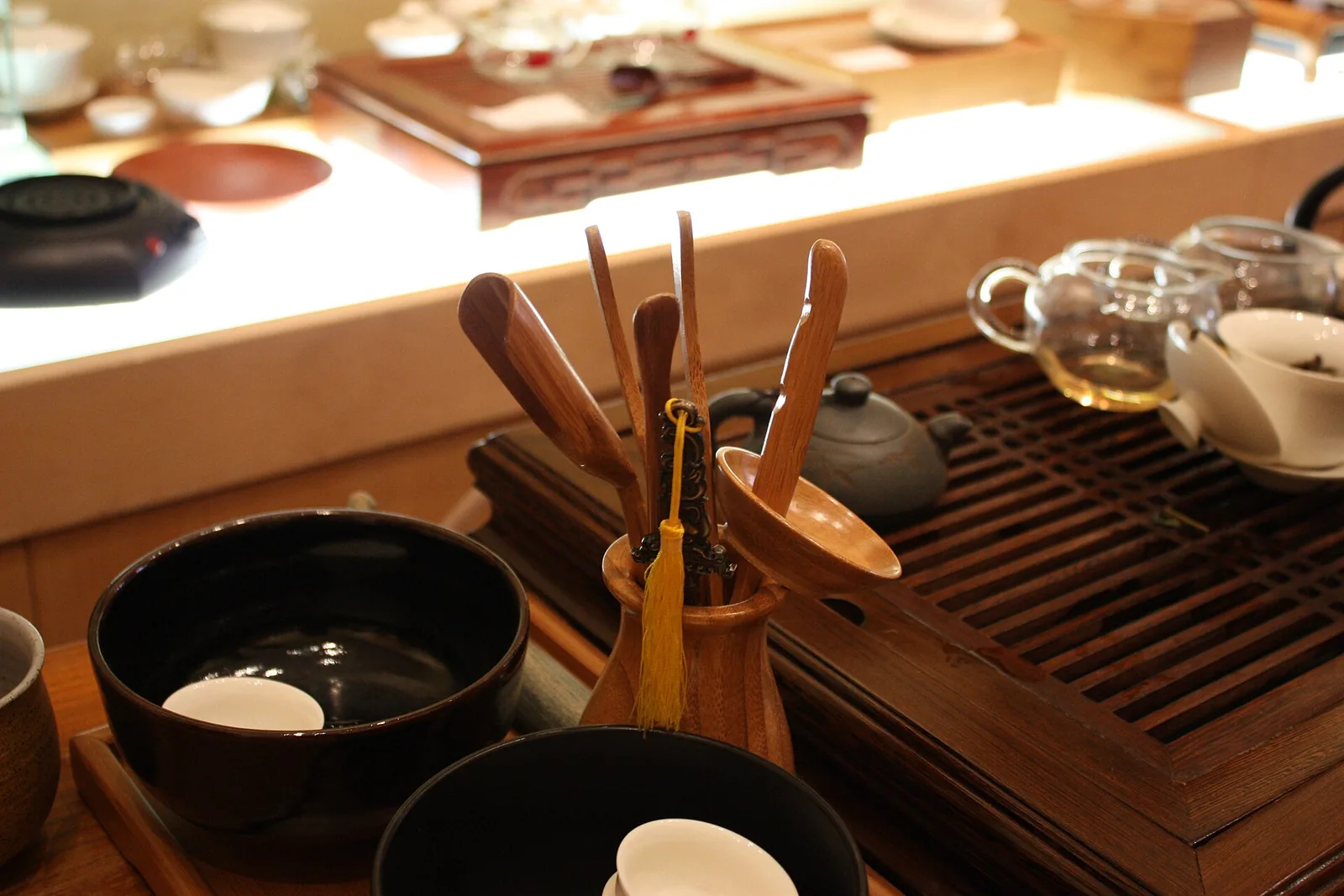
Photo: Wikimedia Commons · CC BY 2.0

The passage
“Tea takes a thousand forms. To speak roughly: some are like barbarian boots, puckered and shriveled; some like the chest of a wild ox, ribbed and draped; some like clouds rising from mountains, coiled and rolling; some like a light breeze over water, rippling and serene.”
Vessels and fire
The passage points toward vessels and fire: “Tea takes a thousand forms. To speak roughly: some are…” is also a question of what the tea is made in.
Material, thickness, shape, and heat change the water and the extraction. A vessel is a tool for controlling time.
Old implements are not automatically better. Understanding them helps us see what a modern gaiwan or teapot is actually doing.
Reading note
Read the passage once for the image, once for the judgment, and once for the practice it implies.
Practice
- Name one thing the passage asks you to notice.
- Compare it with a tea you know.
- Keep the question open.