Chapter III · The Making: Text and editions — Tea takes a thousand forms. To speak roughly: some are…
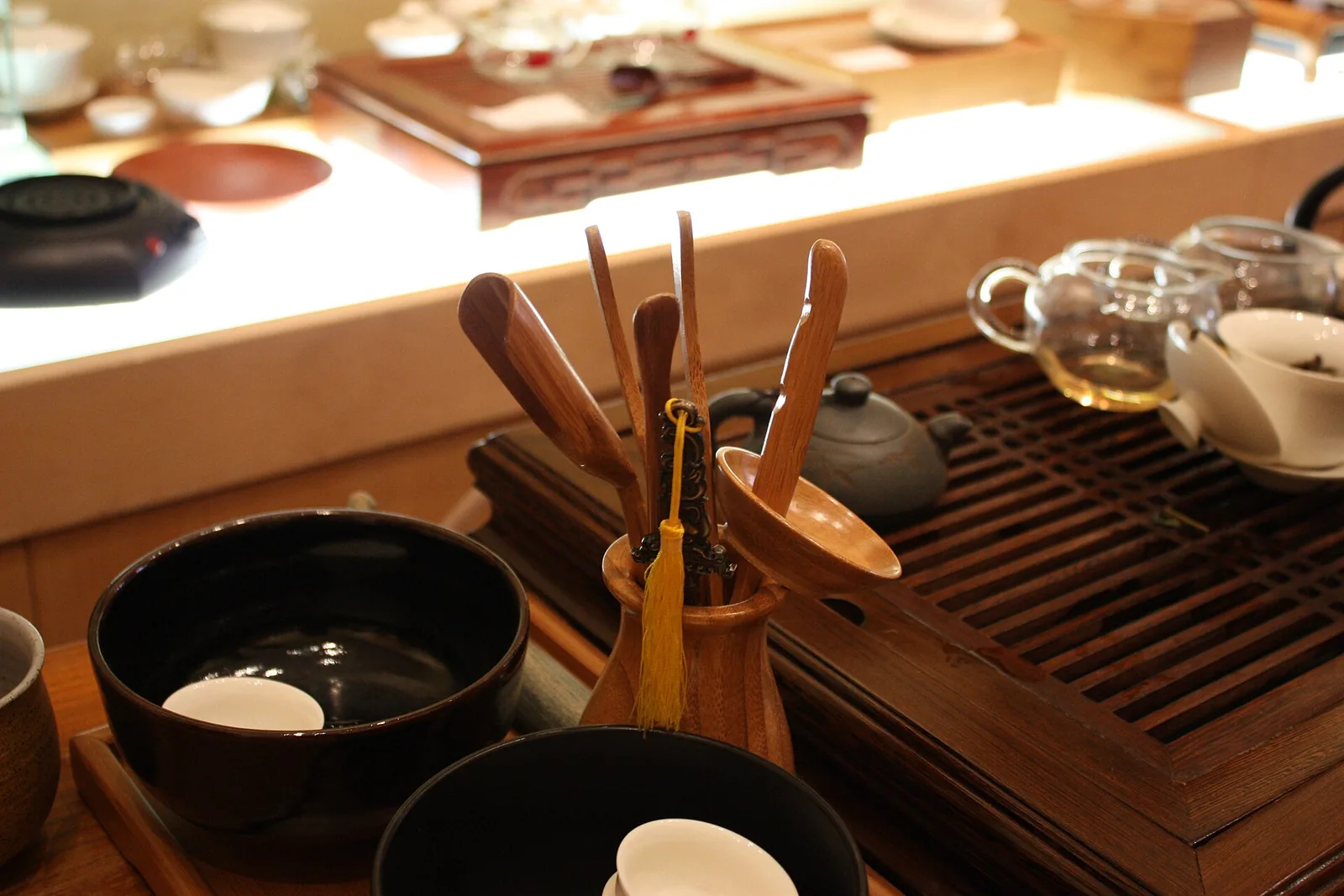
Photo: Wikimedia Commons · CC BY 2.0

The passage
“Tea takes a thousand forms. To speak roughly: some are like barbarian boots, puckered and shriveled; some like the chest of a wild ox, ribbed and draped; some like clouds rising from mountains, coiled and rolling; some like a light breeze over water, rippling and serene.”
Text and editions
The textual history of the Classic of Tea matters because small variants can change how we picture a tool, a process, or a region.
A collation note is not a footnote for specialists alone. It tells us which parts of the text were stable and which were reshaped by later editors.
Read variants with a simple test: does the difference change the practice, or only the wording? Focus on the first.
Reading note
Read the passage once for the image, once for the judgment, and once for the practice it implies.
Practice
- Name one thing the passage asks you to notice.
- Compare it with a tea you know.
- Keep the question open.